
Safety Razor 101: How to Choose, Use, and Get the Most Out of Yours
Safety Razor: What Is It?
A double-edge safety razor blade costs about $0.50 and lasts 5 to 7 shaves. A cartridge refill runs $3 to $4 for roughly the same number of uses. That price gap is one reason more men are going back to a razor design that’s over a century old.
If you’ve never used one, a safety razor can look intimidating: a single exposed blade, no cartridge, no pivoting head. It’s simpler than it looks.
In this guide, I explain what a safety razor actually is, how it’s different from a cartridge or electric shaver, the different types you’ll come across, and how to use one without cutting yourself on your first try.
What Is a Safety Razor?
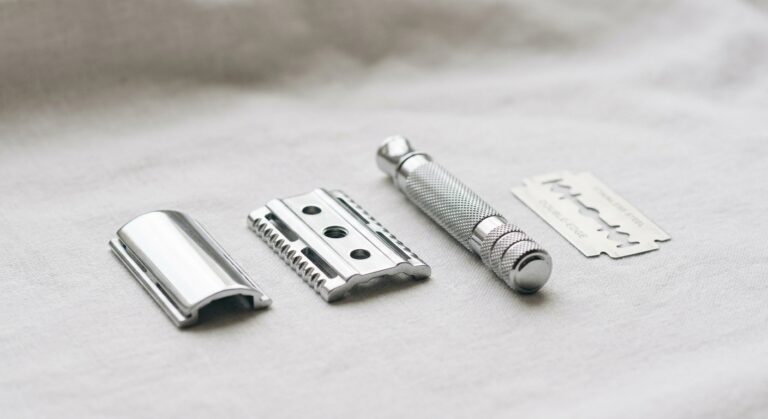
A safety razor holds a single, replaceable double-edge (DE) blade between a base plate and a cap, both screwed onto a handle. A metal guard limits how much of the blade is exposed, which is exactly where the “safety” in the name comes from: it protects your skin from the blade the way a straight razor never did.
That single blade is the key difference from a cartridge razor, which stacks three to six blades permanently into one disposable head. A safety razor gives you the closeness of one very sharp blade with far less risk than a straight razor, and far less plastic waste than a cartridge.
A Brief History of the Safety Razor
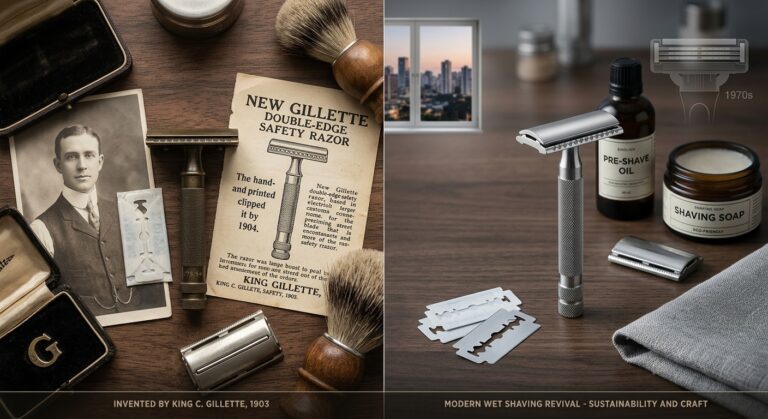
King Camp Gillette developed the double-edge safety razor, first sold in 1903 with the patent granted in 1904, according to the National Inventors Hall of Fame. It became the dominant way American and European men shaved for most of the 20th century, right up until multi-blade cartridges took over shelf space in the 1970s and 1980s.
The safety razor never fully disappeared. Wet-shaving communities kept it alive, and in the past decade it’s picked up new interest from men looking to cut down on both cost and plastic waste from disposable cartridges.
How a Safety Razor Works
A cartridge razor uses multiple blades to lift each hair slightly before cutting it, pass after pass. That lifting effect can pull the hair back down below the skin’s surface once it’s cut, which is part of why ingrown hairs are so common with multi-blade cartridges.
A safety razor cuts with a single blade at a shallow angle, close to the skin, in one clean pass, with no lifting effect from a second or third blade. For men who deal with ingrown hairs regularly, that’s often the main reason to switch. I cover treatment and prevention in full in my guide to ingrown hairs in the beard
Types of Safety Razors
Not all safety razors are built the same way. A few distinctions actually matter once you’re shopping for one:
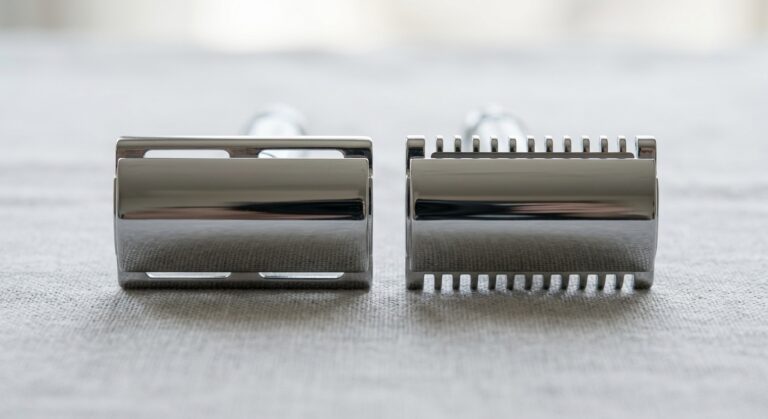
• Closed comb vs. open comb: a closed comb head has a solid, rounded bar between you and the blade, which makes it more forgiving for beginners. An open comb head exposes more of the blade for a more aggressive shave that suits coarser or thicker beards, but with a steeper learning curve.
• One-piece, two-piece, or three-piece: this is about how the razor comes apart to load a blade. Three-piece razors separate into a handle, base plate, and cap; one-piece razors twist open without fully separating. It’s a convenience difference more than a performance one.
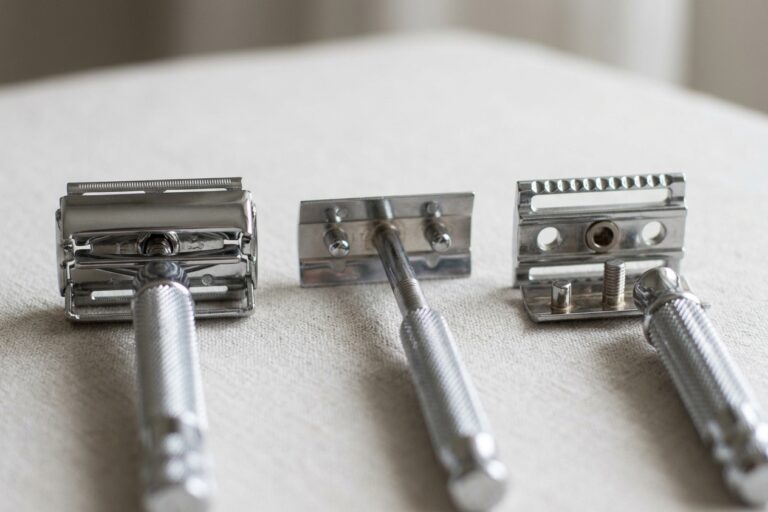
• Adjustable razors: these let you dial the blade’s exposure up or down on the same razor instead of committing to one aggressiveness level, useful for fine-tuning the shave as your technique improves.
Safety Razor vs. Other Shaving Tools
A safety razor sits in the middle of the pack: closer than most cartridges and electric shavers, safer and easier to learn than a straight razor, and cheaper long-term than either. I break down all four options side by side in my full razor vs. electric shaver vs. disposable blade comparison. If you’re still deciding which type actually fits your routine, that’s the place to start.
Pros and Cons of a Safety Razor
Here’s how a safety razor actually holds up once you get past the learning curve.
Pros | Cons |
Closer shave for many men than a cartridge or electric shaver | Real learning curve; technique matters more than with a cartridge |
Roughly $0.07 per shave vs. $0.20 to $0.27 for a cartridge, based on typical blade and cartridge pricing | Higher risk of nicks while you’re still learning the angle |
Far less plastic waste, since only a thin metal blade gets replaced instead of a whole plastic cartridge head | Takes longer per shave than most electric shavers |
The razor itself can last decades with basic care | Higher upfront cost for the razor itself, even though it pays off over time |
💡At roughly $25 to $30 a year in blades for someone shaving daily, a safety razor typically costs a third of what a cartridge razor runs annually, based on typical blade and cartridge pricing.
How to Use a Safety Razor (Step-by-Step)
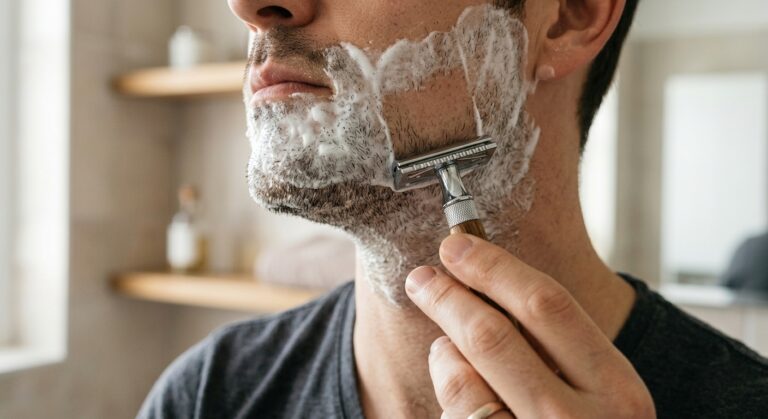
Technique matters more here than with any cartridge or electric shaver. Follow these steps in order the first few times you shave.
1 | Wet your skin and hair thoroughly with warm water, ideally right after a shower, so the hair is softened, per American Academy of Dermatology |
2 | Apply a proper shaving cream or soap, not just foam, and give it a minute to sit on the skin. |
3 | Find your angle before you start cutting. Lay the razor’s top cap flat against your cheek with the handle parallel to the floor; in this position, the blade won’t cut yet. Slowly tip the handle down until you feel and hear the blade just start to catch the stubble. That first point of contact is your angle for the whole stroke. (see image below) |
4 | Keep that angle consistent for the whole stroke. Move the entire razor in short strokes without changing the angle partway through; changing the angle mid-stroke is what causes an uneven cut or a nick. |
5 | Use light pressure only. Let the blade’s own weight do the cutting instead of pressing down. |
6 | Make your first pass in the direction the hair grows, not against it. |
7 | Rinse the blade under warm water every one or two strokes to clear away hair and cream buildup. |
8 | Once your skin is used to the razor, a second pass across the grain can get you closer, but skip this until the first pass feels comfortable. |
9 | Rinse with cool water to close the pores, then apply a balm or moisturizer. |
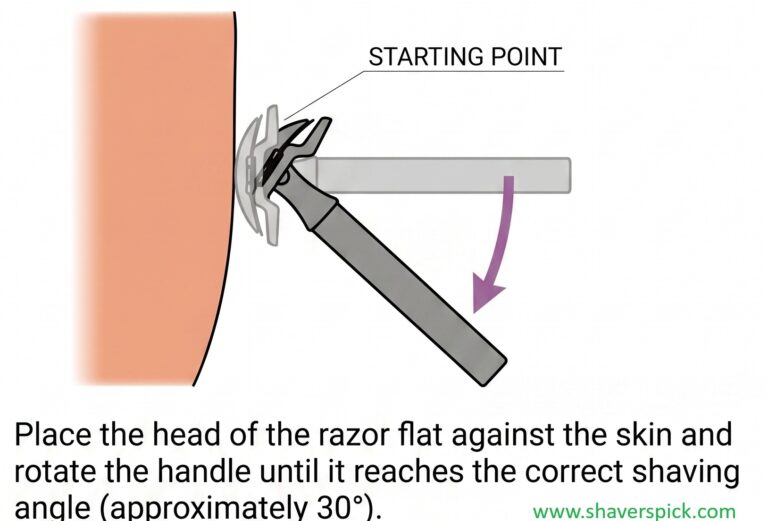
💡Don’t try to get a closer shave by pressing harder. With a single exposed blade, extra pressure is what causes most beginner nicks, not a dull blade.
How to Maintain a Safety Razor

A safety razor needs less upkeep than a straight razor, but a couple of habits keep it working well and help prevent skin irritation.
- Change the blade every 5 to 7 shaves. Dermatologists recommend this general cadence for any blade, since a dull edge drags across skin instead of cutting cleanly, which raises the odds of irritation.
- Dry the head completely after each use and store the razor somewhere dry, not in a humid shower caddy. Leftover moisture on a wet blade is what causes rust and pitting over time.
- Rinse the handle threads occasionally to clear out dried soap, so the razor comes apart easily the next time you need to swap a blade.
Common Beginner Mistakes
Most of the frustration people have with a safety razor in the first few weeks comes down to a handful of habits:
- Pressing down like you would with a cartridge. A safety razor is designed to cut with almost no added pressure.
- Holding the razor too flat or too steep. Either extreme drags at the hair without cutting it cleanly, or bites into the skin.
- Trying multiple aggressive passes right away. Give your skin a few shaves to adjust before going against the grain.
- Not rinsing the blade often enough. A blade caked with hair and cream stops cutting cleanly, which is when most nicks happen.
Frequently Asked Questions
Is a safety razor good for sensitive skin?
Often, yes. A single blade means less repeated dragging over the same patch of skin than a four or five-blade cartridge, which can mean less irritation for a lot of men. Technique still matters more than with a cartridge, so ease into it rather than shaving the way you would with your old razor.
Are safety razors safe for beginners?
Yes, especially a closed comb model. Expect a real learning curve of a few weeks before your technique feels natural, but there’s nothing about a safety razor that makes it unsafe to learn on.
How often should I change the blade?
Every 5 to 7 shaves, in line with general dermatologist guidance on blade freshness. A dull blade is more likely to cause irritation than a sharp one, even though that sounds backwards.
Do safety razors help with ingrown hairs?
Often, yes, for the reasons covered above: a single clean cut at skin level causes less of the pulling effect that leads to ingrown hairs with multi-blade cartridges. Hair type and technique still play a role, so it’s not a guarantee.
Why People Really Use a Safety Razor (Users Poll)
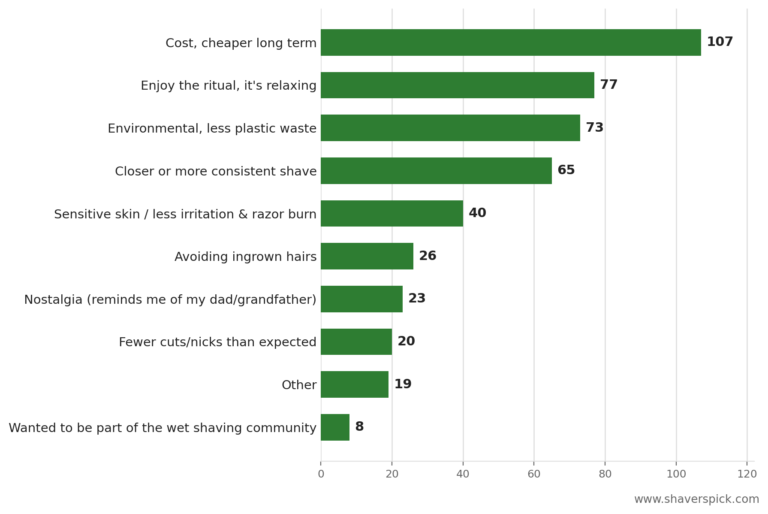
Everything above covers what a safety razor is and how to use one. There’s a lot of interest in safety razors right now, and I got curious about what’s actually behind the choice for the people who use one, so instead of leaving it to vibes, I decided to put some real numbers on it. I asked the r/shaving community on Reddit – original post – to reply with whichever reasons applied to them, multiple selections allowed, and got strong engagement.
I compiled the full results in a follow-up post, with the results below:
The Bottom Line
A safety razor isn’t the fastest way to shave, and it takes a few weeks to get comfortable with. But once the technique clicks, it’s a closer shave than most cartridges, a fraction of the long-term cost, and a lot less plastic in the trash.
If wet shaving with a blade isn’t your style, or you just want speed on a busy morning, my picks for the best electric shavers for men cover the other end of that trade-off.
About the Author:
I'm R. Cristo, the person behind ShaversPick. I write about men's grooming, tools, and the everyday health side of it too — helping you make smarter choices, save money where it counts, and take better care of yourself along the way. I'm also active in those same discussions on Reddit as u/foil_and_edge, trading tips and troubleshooting with the community there.