
Ingrown Hair in Beard: Causes, Treatment & Prevention
Ingrown Hair
Pseudofolliculitis barbae — the clinical name for chronic ingrown hairs in the beard — is one of the most common shaving-related skin issues, especially for men with curly or coily hair, according to a review published in the Journal of Drugs in Dermatology. Ingrown hairs aren’t a rare inconvenience. They’re one of the most common skin complaints tied directly to shaving, and almost every man who picks up a razor will run into one eventually — whether it shows up as a single red bump on the jaw or a stubborn patch of irritation along the neck.
If you’ve ever felt a hard, tender bump under your skin a day or two after shaving, you already know how frustrating an ingrown hair in the beard can be. This guide breaks down exactly what’s happening under your skin, how to treat it safely, and — more importantly — how to stop it from coming back.
What Is an Ingrown Hair in the Beard?
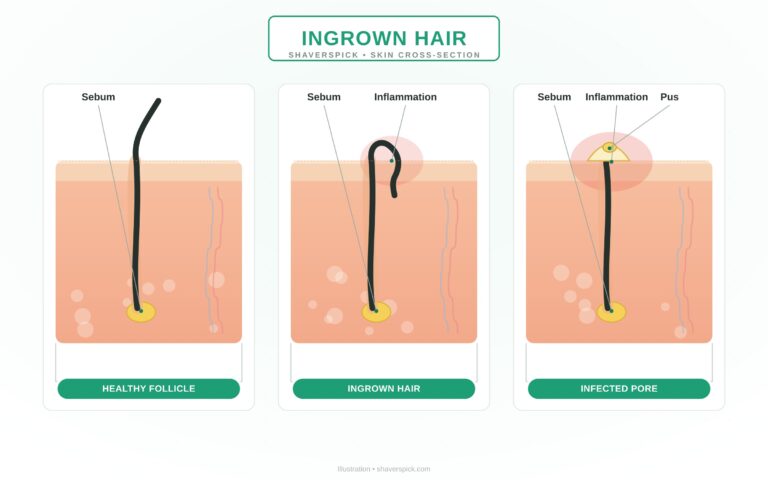
An ingrown hair happens when a shaved or trimmed hair curls back on itself and grows sideways or downward into the skin instead of straight out of the follicle. Your immune system treats that trapped hair like a splinter — a foreign object under the skin — and reacts with inflammation. That reaction is what causes the small, round, often red or skin-colored bump you feel, sometimes with a visible loop of hair trapped underneath.
Dermatologists refer to the more chronic, recurring version of this condition as pseudofolliculitis barbae, or PFB. It’s especially common in men with curly or tightly coiled facial hair, since curved hair is far more likely to curve back into the skin after being cut short. But straight-haired men aren’t exempt — an ingrown hair beard bump can happen to anyone who shaves too closely, shaves against the grain, or uses a dull blade.
Left alone, most ingrown hairs resolve on their own within a week or two. But when they get infected, scratched, or repeatedly irritated by daily shaving, they can turn into ongoing breakouts, dark spots, and even scarring over time.
Why Ingrown Hair Happens After Shaving
Shaving is by far the most common trigger, and it’s not just about technique — it’s about how a razor cuts hair compared to how hair naturally grows. A few of the biggest culprits behind ingrown hair after shaving:
- Cutting the hair at a sharp angle. A razor blade slices hair at a slant, creating a pointed tip that pierces back through the skin far more easily than a naturally rounded hair tip.
- Shaving too close. Pressing hard or going over the same area repeatedly cuts hair below the skin’s surface, raising the odds it curls and re-enters the follicle wall as it regrows.
- Shaving against the grain. It gives a closer shave, but also a sharper cut angle and more irritation — a combination that makes ingrown hair from shaving far more likely.
- Dead skin buildup. When dead skin cells aren’t cleared regularly, they can physically block a regrowing hair’s path out of the follicle, pushing it sideways instead.
- Dull or dirty blades. A worn blade tugs and drags instead of cutting cleanly, roughing up the follicle opening and making it easier for hair to misdirect as it grows back.
None of these are unusual habits — they describe how most men shave by default. That’s exactly why ingrown hairs are so widespread rather than a sign that something is wrong with your skin.
Ingrown Hair on Neck: Why This Spot Gets Hit Hardest
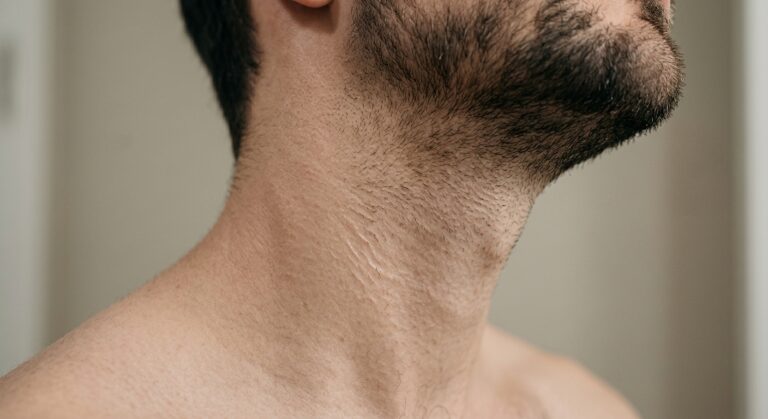
If your ingrown hairs cluster under the jaw and down the neck, you’re not imagining a pattern. The neck is the single most common site for ingrown hair complaints, for a few clear reasons.
Hair growth direction changes more on the neck than almost anywhere else on the face, often running in several directions on the underside of the jaw and throat. That makes it nearly impossible to shave consistently with the grain the way you can on the cheeks. The neck also has thinner, more sensitive skin with less underlying support, so it’s more prone to irritation and razor burn — which compounds ingrown hair risk. And because it’s harder to see clearly while shaving, it tends to get more passes with the razor to “get it all,” meaning more cuts below the skin’s surface.
Treating an ingrown hair on the neck follows the same principles as anywhere else on the beard, but prevention matters even more here. If you only change one part of your shaving routine, make it how you handle the neck: fewer passes, lighter pressure, and shaving with the grain even if it means a slightly less close finish.
Ingrown Hair after Shaving: How to Treat
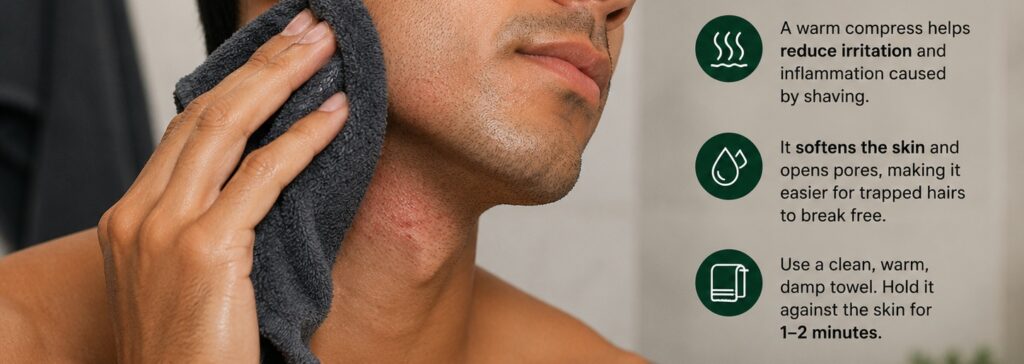
Most ingrown hairs clear up with a bit of patience and the right care — not aggressive digging.
- Stop shaving the area. Give the spot at least a few days off from a razor. Continuing to shave over an active ingrown hair irritates it further and raises the odds of infection.
- Apply a warm compress. A warm, damp cloth held on the bump for 5–10 minutes a couple of times a day softens the skin and can help the trapped hair work its way back to the surface on its own.
- Exfoliate gently. Once irritation calms down, a mild exfoliant — a soft-bristle brush, a washcloth, or a chemical exfoliant with salicylic acid — helps clear the dead skin that’s trapping the hair. Skip harsh scrubbing directly on an inflamed bump.
- Only free a hair that’s already visible at the surface. If you can clearly see a loop of hair sitting just under a thin layer of skin, sterilized tweezers can gently lift it out. Never dig for a hair you can’t see — that’s how ingrown hairs turn into infections and scars.
- Calm the skin afterward. A fragrance-free moisturizer or a product with aloe, niacinamide, or a low concentration of hydrocortisone can reduce redness and speed healing.
Safety Razor vs. Multi-Blade Razor: Why It Matters for Ingrown Hairs
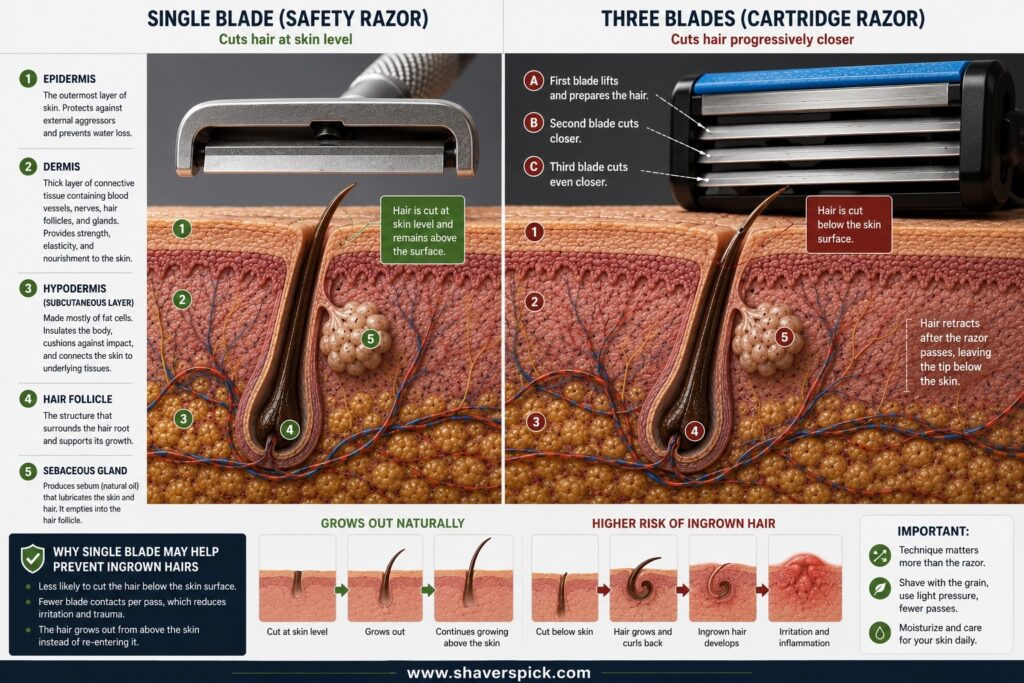
Not all razors treat hair the same way — and that difference explains why switching razors may help with ingrown hairs.
Multi-blade cartridges use a lift-and-cut mechanism: the first blade pulls the hair up out of the follicle, and each blade after that cuts it a little lower, down to just below the skin’s surface. Once the hair relaxes back down, that sharp, buried tip ends up aimed straight at the follicle wall as it regrows — which is exactly how an ingrown hair forms. A safety razor skips this as the single blade cuts hair right at skin level in one pass, so it grows back from a clean, flush cut instead of a buried one. Mayo Clinic lists a sharp, single-blade razor as one of its recommendations for preventing razor bumps.
The catch is technique — a safety razor takes a lighter hand to avoid nicks. If you’d rather skip that learning curve, a foil electric shaver offers a similar edge: the foil keeps the blade off the skin entirely, so hair never gets cut below the surface either. Our comparison of straight razors, electric shavers, and safety razors breaks down which option fits your routine best.
When an Ingrown Hair Needs a Dermatologist

Most ingrown hairs are a minor, temporary annoyance. But the signs below point to infection rather than simple irritation, and that distinction matters — an infected ingrown hair pushed further by picking or digging can drive bacteria deeper into the skin. Get it checked out if you notice:
- Increasing pain that feels throbbing or sharp, not just tender
- Pus, yellow discharge, or red streaking spreading from the area
- A firm, hard lump that doesn’t shrink after a few days
- Warmth around the bump that spreads rather than staying localized
- Bumps that keep returning in the same spot despite changing your shaving routine
- Dark spots or raised scars left behind after the bump heals
- Widespread breakouts across the jaw and neck rather than isolated bumps
Recurring, severe cases are often true pseudofolliculitis barbae, and a dermatologist has options that go beyond home care: prescription topical or oral antibiotics for active infection, a corticosteroid injection to bring down stubborn inflammation quickly, or professional extraction of a deeply trapped hair using sterile tools. For spots that flare up again and again no matter the routine, laser hair reduction is often the most reliable long-term fix, since it targets the follicle itself instead of treating each flare-up as it comes.
Ingrown Hair Prevention: Building a Shave Routine That Actually Works
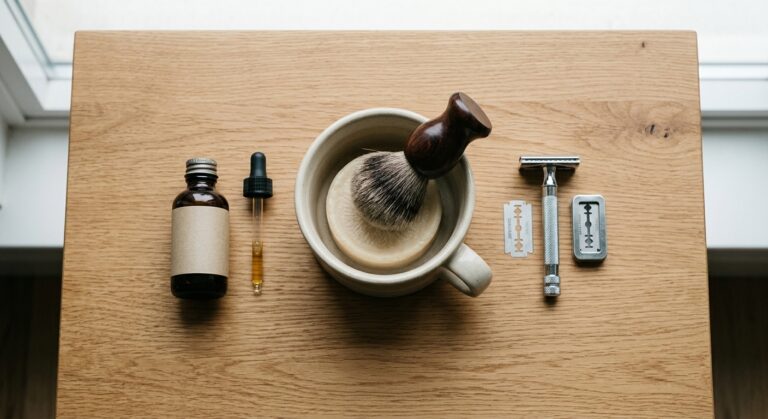
Treating an ingrown hair is only half the picture. Since shaving is the main trigger, the real fix is in how you shave. A few adjustments make a measurable difference for most men:
- Prep the skin first. Shave after a warm shower, or wet the beard with warm water for a minute before applying product. Warm water softens hair and opens the follicle, making it easier for hair to exit straight.
- Use a fresh, sharp blade. Swap blades regularly. A sharp blade cuts cleanly in one pass instead of tugging, cutting down on both irritation and angled hair tips.
- Try a single-blade razor if you’re especially prone. Multi-blade cartridges cut hair progressively shorter with each pass, which increases the odds of a sharp tip curling back under the skin. A single sharp blade cuts less aggressively close.
- Shave with the grain, not against it. It’s a trade-off — slightly less closeness for a big drop in ingrown hair risk, especially on the neck.
- Limit passes over the same area. One clean pass beats three rushed ones. If you need it closer, re-lather and go again rather than dragging a dry blade repeatedly.
- Exfoliate a few times a week. Regular, gentle exfoliation between shaves keeps dead skin from blocking regrowing hairs — one of the simplest, most overlooked ingrown hair prevention habits.
- Moisturize daily. Well-hydrated skin lets hair grow out more easily and heals faster after each shave.
- Consider your tool. Men who are especially prone to ingrown hairs often see fewer breakouts switching between an electric shaver and a manual razor, since electric shavers cut less aggressively close to the skin.
None of these changes need to happen all at once. Start with the blade and the grain direction — those two alone solve the problem for a large share of men. And if you’re still working on your technique, my full shaving guide covers the basics.
Why This Matters More Than Most Men Realize
It’s easy to treat ingrown hairs as a cosmetic annoyance, but for a lot of men they’re a daily source of discomfort, self-consciousness, and — over time — visible skin damage. Recurring ingrown hairs can leave behind dark spots and scarring that outlast the bump itself, and men dealing with chronic PFB often describe changing how they groom, dress, or even show up to work because of it.
There’s also a simple practical angle: the products, extra shaving time, and dermatologist visits tied to chronic ingrown hairs add up. A shaving routine built around prevention — the right tool, the right technique, consistent aftercare — isn’t just about comfort. It protects your skin long-term and saves you from a problem that, for most men, is largely avoidable.
Frequently Asked Questions
Does an electric shaver help with ingrown hairs?
For many men, yes. Electric shavers don’t cut hair as far below the skin’s surface as a manual blade does, which lowers the odds of a sharp, angled tip curling back into the follicle. It’s one of the most common recommendations for men dealing with frequent ingrown hair beard breakouts — our guide to the best electric shavers for men breaks down the models best suited to sensitive, ingrown-hair-prone skin.
How long does an ingrown hair take to heal?
Most clear up within one to two weeks once you stop irritating the area. Deeper or infected ones can take longer and may need a dermatologist’s help.
Can I pop an ingrown hair like a pimple?
No. Squeezing pushes the trapped hair and inflammation deeper, which raises the risk of infection and scarring. Warm compresses and gentle exfoliation are safer.
Is ingrown hair on the neck different from other ingrown hairs?
Not medically — but the neck’s changing hair growth direction and thinner skin make it the most common trouble spot, so prevention habits matter even more there.
The Bottom Line
Ingrown hairs are one of the most common side effects of shaving, not a sign you’re doing something drastically wrong. A few adjustments to your technique — a sharper blade, fewer passes, shaving with the grain, and a consistent exfoliation routine — clear up most cases and keep new ones from forming. If ingrown hairs are a recurring problem no matter what you try, it may be time to rethink your razor altogether.
About the Author:
I'm R. Cristo, the person behind ShaversPick. I write about men's grooming, tools, and the everyday health side of it too — helping you make smarter choices, save money where it counts, and take better care of yourself along the way. I'm also active in those same discussions on Reddit as u/foil_and_edge, trading tips and troubleshooting with the community there.